
Finding the right buyer for your business in Ireland can be challenging but rewarding. To ensure a smooth sale process, focus on these key steps:
- Define Your Ideal Buyer: Identify the type of buyer that suits your business – individuals, companies, or investors – and understand their motivations, such as growth potential or market access.
- Verify Buyer Credentials: Assess their financial capacity by reviewing records like profit statements and ensuring operational compatibility with your business’s needs.
- Leverage Bizmark: Use Bizmark, a marketplace for Irish SMEs, to connect with pre-screened buyers and protect confidentiality through NDAs.
- Tap Local Networks: Engage with Irish business associations, chambers, and events to build connections.
- Prepare a Strong Prospectus: Highlight your business’s strengths and provide transparent, accurate financial and operational data.
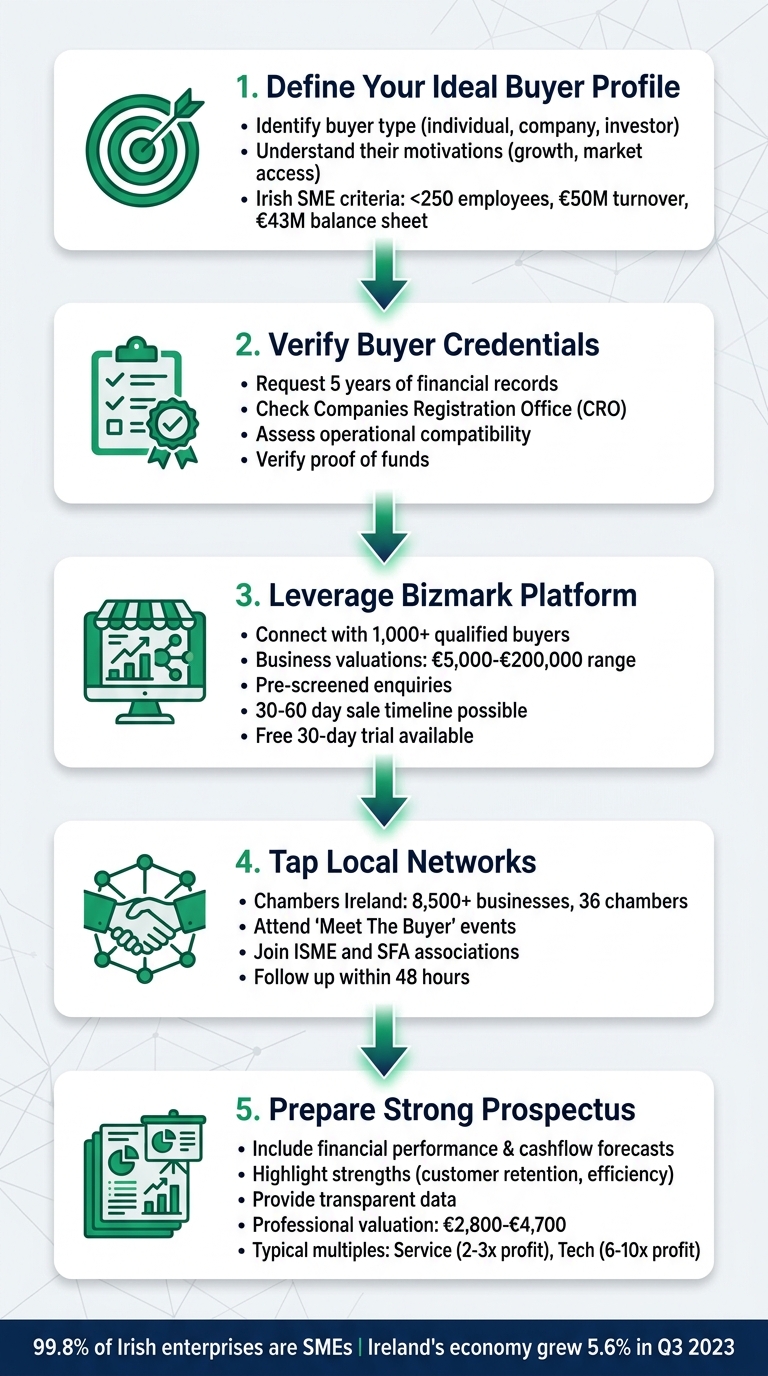
5-Step Process to Find Qualified Buyers for Your Irish Business
How to Attract Serious Buyers for your Business
sbb-itb-755c06c
Define Your Ideal Buyer Profile
Before entertaining enquiries about selling your business, it’s vital to define your ideal buyer. This step saves you from wasting time with unsuitable prospects and increases the likelihood of a smooth and successful sale. Think of it as creating a job description, but instead of hiring an employee, you’re looking for someone with the financial resources, industry expertise, and operational skills to take over your business. A clear buyer profile ensures your business aligns well with their expectations.
In Ireland, SMEs are defined as businesses with fewer than 250 employees, an annual turnover of no more than €50 million, or a balance sheet total under €43 million. Your ideal buyer could be an individual entrepreneur, a company pursuing strategic acquisitions, an angel investor, a venture capitalist, or a private equity firm. Each type of buyer brings unique motivations and resources. For instance, strategic buyers in Ireland often focus on sectors like telecommunications, media, and technology, which have been particularly active for mergers and acquisitions recently. Many also value Ireland’s EU membership, offering access to the single market of 26 countries.
Understand What Potential Buyers Want
Buyers don’t make business purchases on a whim. They’re often motivated by factors like growth potential, steady income streams, established customer bases, market access, or diversification opportunities. Some may also look for ways to scale through assets like intellectual property or skilled employees. By understanding these motivations, you can present your business in the best light.
For example, if a buyer prioritises market expansion, highlight your distribution networks and customer demographics. If they’re more interested in consistent cash flow, showcase your profit margins and recurring revenue streams. Tailoring your pitch to their priorities makes your business more appealing.
Evaluate Financial and Operational Compatibility
It’s not enough for a buyer to be interested – they also need to prove they have the financial and operational capacity to take on your business. Financial strength is a must. In Ireland, buyers might access funding options like loans from the Strategic Banking Corporation of Ireland (SBCI), grants from Local Enterprise Offices (LEOs), or support from Microfinance Ireland. To assess their stability, request at least five years of financial records, including profit and loss statements, balance sheets, and cash flow reports. You should also verify their compliance history through the Companies Registration Office (CRO) and the Registry of Beneficial Ownership to uncover the individuals behind corporate buyers.
Operational compatibility is equally important. Does the buyer have the skills to manage your business’s legal structure, whether it’s a DAC, PLC, or LLC? Can they handle your specific assets, like employee contracts or intellectual property? As BXI aptly puts it:
"no chemistry, no deal".
If a buyer’s goals conflict with how you envision your staff or clients being treated after the sale, don’t hesitate to walk away. With Ireland’s economy growing by 5.6% in the third quarter of 2023, there’s no shortage of qualified buyers. Waiting for the right match ensures a smoother transition and a more satisfying outcome.
Use Bizmark for Targeted Buyer Matching
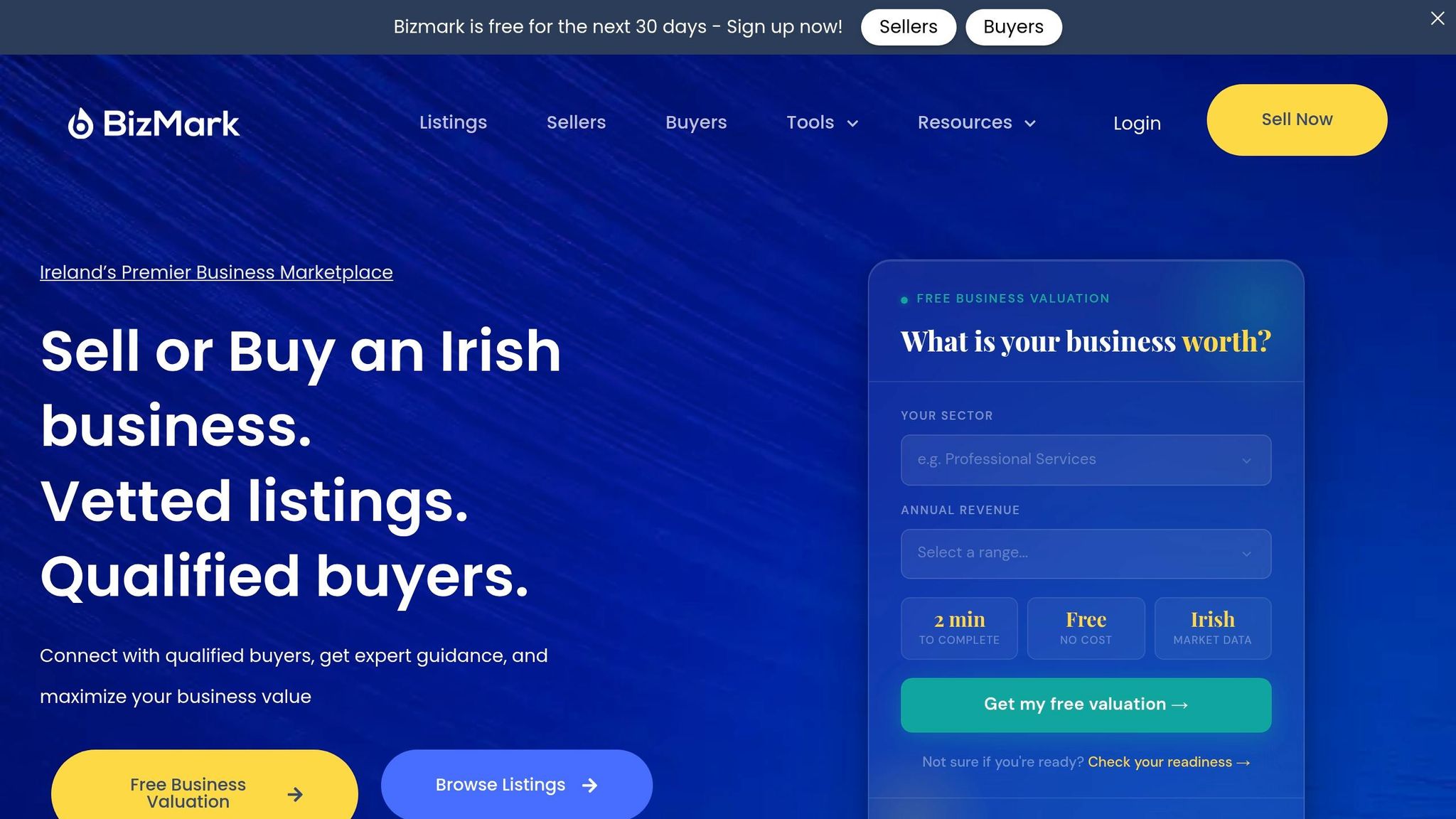
Once you’ve identified your ideal buyer, the next step is connecting with serious prospects who meet your criteria. Bizmark is Ireland’s go-to marketplace for SMEs, dedicated to local businesses valued between €5,000 and €200,000. Every business listing on the platform is thoroughly vetted, and all buyer enquiries are pre-screened to ensure you only hear from genuinely interested parties. This focused approach has helped many sellers finalise deals quickly and without unnecessary hassle. Here’s how Bizmark’s specialised tools and features can simplify your selling process.
Create a Detailed Business Listing
Your business listing is the first impression potential buyers will have, so it’s essential to get it right. Bizmark’s guided process makes it easy to showcase vital performance metrics, such as web traffic, customer demographics, and financial results – key details that buyers rely on to evaluate opportunities. Before listing, you can use Bizmark’s free business valuation tool, which takes just two minutes and leverages Irish market data to help set a competitive asking price.
For instance, a green-certified flat roofing company in Cork was listed at €720,000, with multiples of 3.79X profit and 0.76X revenue. Similarly, an HR SaaS platform in Dublin, also priced at €720,000, highlighted its Microsoft 365 integration and achieved multiples of 7.06X profit and 1.71X revenue. Providing detailed, specific data like this makes it easier for qualified buyers to assess whether your business is the right fit.
Use Bizmark’s Buyer Matching Tools
Once your listing is live, Bizmark’s matching algorithms work to connect your business with buyers whose search criteria align with your profile. Buyers can filter by industry, location, revenue, and other factors, ensuring that the enquiries you receive are from genuinely interested prospects. Additionally, Bizmark’s support team is on hand to offer personalised advice on how to position your business for the best possible outcome. Sellers frequently report closing deals in as little as 30 days, thanks to this targeted approach.
Protect Confidentiality with Bizmark
When buyers start showing interest, safeguarding your sensitive business information becomes a priority. Sharing operational and financial details too early can create unnecessary risks, such as unsettling employees, customers, or suppliers. Bizmark addresses this by enforcing strict Non-Disclosure Agreements (NDAs) and providing secure communication channels. This allows you to present your business’s strengths while maintaining control over what information is shared and when.
To further ensure quality, all enquiries are pre-screened to confirm the buyer’s intent before granting access to detailed information. Plus, Bizmark is currently offering a free 30-day trial for new users, giving you a risk-free opportunity to explore the platform and see how it can work for you.
Connect with Local Irish Industry Networks
Online platforms are vital, but in Ireland’s close-knit business community, personal connections and reputation often carry more weight. Buyers here tend to trust recommendations or work with known entities. By tapping into local industry networks, you can directly reach prospects who may already know your business or sector. This approach complements your Bizmark online strategy, giving you a well-rounded way to connect with potential buyers.
Engage with Industry Associations and Groups
Ireland boasts a robust network of business associations that can help you connect with key players. Chambers Ireland, the country’s largest business network, represents over 8,500 businesses through 36 member chambers. Joining your local chamber – whether in Dublin, Cork, Galway, Limerick, or Waterford – offers access to structured networking opportunities like B2B sessions, breakfast briefings, and major events. These gatherings are ideal for building referrals and meeting decision-makers who may be interested in acquisitions.
For SMEs, the Irish Small and Medium Enterprises Association (ISME) provides tailored networking forums designed for business owners. Similarly, the Small Firms Association (SFA) hosts large-scale networking events and awards programmes that can raise your profile among potential buyers. If you’re looking to connect with high-level executives, BusinessRiver facilitates industry-specific round tables across more than 40 gated B2B communities, engaging many of Ireland’s leading companies.
In addition to these formal groups, attending in-person events can further expand your network and open doors to new opportunities.
Attend Business Events and Networking Functions
Key events can provide unique opportunities to meet potential buyers. For example, in April 2025, Fingal Chamber and the Local Enterprise Office Fingal hosted the "Meet The Buyer 2025" event at the Maldron Hotel Dublin Airport. At this event, local suppliers had one-on-one meetings with senior procurement professionals from organisations like Aer Lingus, Glenveagh Homes, daa, and Fingal County Council. Anthony Cooney, Chief Executive of Fingal Chamber, described the event as:
"Meet The Buyer 2025 is a game-changing opportunity for local businesses to connect with some of the most well-established organisations in the region."
To make the most of such events, review the guest list beforehand to identify influential buyers. Arrive with a clear objective – such as connecting with referral partners – and prepare a concise 20–30 second introduction that focuses on the problem your business solves. Avoid hard selling. After the event, follow up within 48 hours – whether it’s arranging a coffee meeting or sending a helpful resource – to keep the connection alive. By offering value and building trust, you position yourself as a reliable contact when buyers are ready to take action.
Verify Buyer Qualifications and Financial Capacity
After connecting with potential buyers through Bizmark or local networks, the next step is making sure they have the means and expertise to follow through with the purchase. Some buyers may lack either the financial resources or the know-how to run your business effectively. By vetting them early, you save time, protect sensitive information, and focus only on serious prospects who can close the deal. This step ensures your business is only presented to buyers with the ability and vision to see it thrive.
In Ireland’s SME market – where 99.8% of active enterprises are micro, small, or medium-sized – understanding a buyer’s financial position is critical. For reference:
- Micro Enterprises: Annual turnover or balance sheet total of up to €2 million.
- Small Enterprises: Turnover capped at €10 million.
- Medium Enterprises: Turnover up to €50 million or a balance sheet total of €43 million.
Knowing which category your buyer fits into helps you gauge whether they can meet your asking price.
Conduct Due Diligence on Potential Buyers
Start by requesting a detailed business plan that outlines the buyer’s vision and strategy. This will show whether they truly understand your industry and have a realistic growth plan. Also, ask for cashflow forecasts to confirm their financial stability.
Look beyond the numbers – review their business experience and professional background. Do they have the skills and expertise to maintain your company’s direction and culture? Transparent conversations can reveal their motivations. Are they aiming to scale, enter new markets, or invest in technology? Knowing their post-acquisition goals helps you determine if they align with your business’s long-term vision.
It’s also important to verify compliance. Check their standing with the Companies Registration Office (CRO) and conduct sanctions checks on directors and beneficial owners. The Bank of Ireland recommends:
"It is always a good idea to consult with your financial advisor/accountant to seek assistance and/or review any proposal in advance of meeting with us".
Encouraging buyers to have their proposals reviewed by experts shows they’re serious and ensures their financial figures are accurate. Once their business plan and background are assessed, shift your focus to securing a firm financial commitment before sharing sensitive details.
Request Proof of Funds and Intent
Before sharing detailed financial information, require a Letter of Intent (LOI). This document should include the proposed purchase price, their vision for the business, and their strategy. Also, ask for verifiable proof of funds – such as bank statements or accountant-verified financials. To ensure they meet the financial thresholds for your business size, request turnover and balance sheet records.
Gathering this information is similar to what a bank would do when assessing a loan. This step ensures you’re dealing with buyers who are financially prepared and committed. By confirming their financial capacity and strategic goals early, you lay the groundwork for a successful and mutually beneficial sale.
Present Your Business to Attract Qualified Buyers
Once you’ve confirmed a buyer’s financial ability and genuine interest, the next step is to present your business in a way that highlights its strengths and value. This stage is crucial – it’s where you shift from evaluating potential buyers to showing them why your business is worth their investment.
Prepare a Detailed Business Prospectus
Start by creating a prospectus that provides a clear overview of your business. This document should include essential details like financial performance, your business’s classification (whether it’s micro, small, or medium), a business plan, and cashflow forecasts. It’s also important to outline specific risks, breaking them down into categories like market, operational, or financial risks. For SMEs focused on growth, you might consider using an "EU growth prospectus" format, which offers a streamlined way to highlight potential.
To ensure your prospectus is well-prepared and accurate, consult with your financial adviser or accountant. A well-crafted prospectus not only informs but also sets the stage to showcase what makes your business stand out.
Emphasise Your Business’s Strengths
This is your chance to highlight what makes your business appealing. Focus on key advantages like specialised expertise, a loyal customer base, efficient operations, or proprietary technology. For example, if your business boasts a customer retention rate 40% higher than the industry average, that’s a compelling selling point. Similarly, operational efficiencies – such as a manufacturing process with a 98% yield rate – can demonstrate profitability and reliability for potential buyers.
Using a SWOT analysis can also help. By identifying strengths like strategic partnerships, a cohesive team, or a strong organisational culture, you can provide buyers with a clear picture of what sets your business apart. Just make sure that all claims are backed by transparent and accurate financial data.
Provide Accurate and Transparent Information
Transparency is a cornerstone of trust during the due diligence process. As corporate barrister Stuart Connolly puts it:
"Due diligence means checking the business’s finances and legal obligations to find any potential problems before you buy".
To build this trust, ensure your financial records and legal documents are well-organised and up-to-date. Be proactive about disclosing any potential issues – this not only builds credibility but also helps avoid surprises that could derail the sale. Double-check that all legal obligations, such as employment contracts and regulatory filings, are accurate. Additionally, a Heads of Terms document can be helpful for outlining the sale’s scope, price, and conditions.
Conclusion
A successful sale of your Irish SME hinges on a well-defined buyer profile, smart use of platforms like Bizmark, and strong local networking. The process of finding qualified buyers requires a focused approach: identify your ideal buyer, thoroughly vet their credentials, and showcase your business in a transparent and appealing way.
Bizmark plays a key role by connecting sellers with a network of over 1,000 qualified buyers actively seeking Irish business opportunities. For instance, one seller managed to sell their business within just 60 days of listing it on Bizmark.
To maximise your chances, it’s important to combine the reach of online platforms with the trust built through local networks. Ensuring proper due diligence – like verifying proof of funds – helps confirm you’re dealing with credible buyers.
Preparation is everything. As outlined, creating a detailed prospectus, conducting thorough buyer vetting, and securing a professional valuation (€2,800–€4,700) all contribute to a seamless transition. Accurate financial records and a clear presentation of your business’s strengths help demonstrate its value. Whether you’re selling a service business at 2-3 times annual profit or a tech company at 6-10 times or higher, clarity and preparation make all the difference.
A well-crafted strategy attracts buyers who see the value in your business and are ready to invest. Start drafting your prospectus today to ensure you connect with the right buyer.
FAQs
What’s the quickest way to spot a time-waster buyer?
The fastest way to recognise a buyer who might be wasting your time is by paying attention to their behaviour during early conversations. Look out for signs like frequent distractions, a lack of focus, or asking surface-level questions. Buyers who come unprepared or respond poorly might not be genuinely interested. Keep an eye on their attentiveness, the depth of their questions, and how well-prepared they are to gauge their level of seriousness.
When should I ask for proof of funds and an LOI?
Before diving too deep into discussions, it’s smart to ask for proof of funds and a Letter of Intent (LOI). These documents play a crucial role early on. Proof of funds ensures the buyer has the financial ability to proceed, while the LOI signals their genuine interest in moving forward. Having these in hand gives you the confidence to share financial details and continue negotiations without unnecessary risks.
How do I share details without risking confidentiality?
To keep your business information private, begin by creating a well-defined non-disclosure agreement (NDA). This document should clearly specify what information is considered confidential and who the agreement applies to. Initially, share only the most essential details, and reserve sensitive disclosures until the buyer has been thoroughly vetted and the NDA is signed.
Always use secure communication methods to exchange information. Additionally, restrict access to confidential data, ensuring it is only available to serious and qualified buyers. These steps can help maintain your business’s privacy throughout the process.